English
.webp?width=18&height=18&name=Vector%20(15).webp)

About The Video
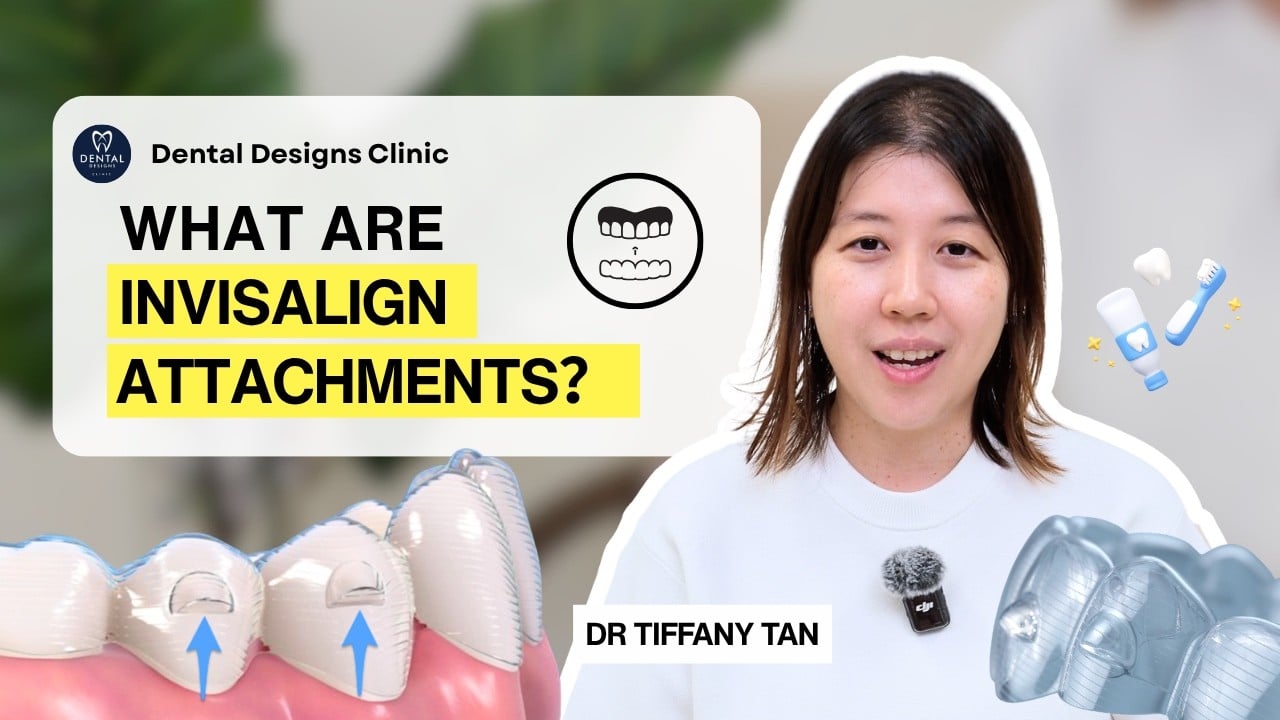
Dr Tiffany explains how Invisalign attachments work as small tooth-coloured bumps that help aligners grip onto teeth more effectively. She discusses why attachments are commonly used for more complex tooth movements, such as rotating teeth, moving teeth vertically, or providing additional anchorage during treatment. While Invisalign aligners can still move teeth without attachments, she explains how attachments can improve the predictability and efficiency of certain movements.
Dr Tiffany also walks patients through the attachment placement process, explaining how they are bonded onto the teeth using a customised Invisalign template. She addresses common concerns about attachments falling off, swallowing attachments, visibility during treatment, and whether attachments are always necessary for successful Invisalign treatment.
Dr Tiffany provides a comprehensive overview of Invisalign attachments and the important role they play in modern clear aligner treatment. She explains that attachments act as small handles that allow Invisalign aligners to apply targeted forces to specific teeth, making it easier to achieve complex movements such as tooth rotation, intrusion, and controlled repositioning.
The video further explores common aesthetic concerns surrounding attachments, including their visibility on front teeth and the importance of using tooth-coloured materials that blend naturally with surrounding teeth. Dr Tiffany concludes with practical advice on oral hygiene, explaining how attachments can create additional areas where plaque and staining may accumulate, and why thorough brushing remains important throughout Invisalign treatment. If you're considering Invisalign treatment and would like to understand whether attachments may be required for your case, schedule a consultation with our team to receive a personalised assessment and treatment plan.