English
.webp?width=18&height=18&name=Vector%20(15).webp)

About The Video
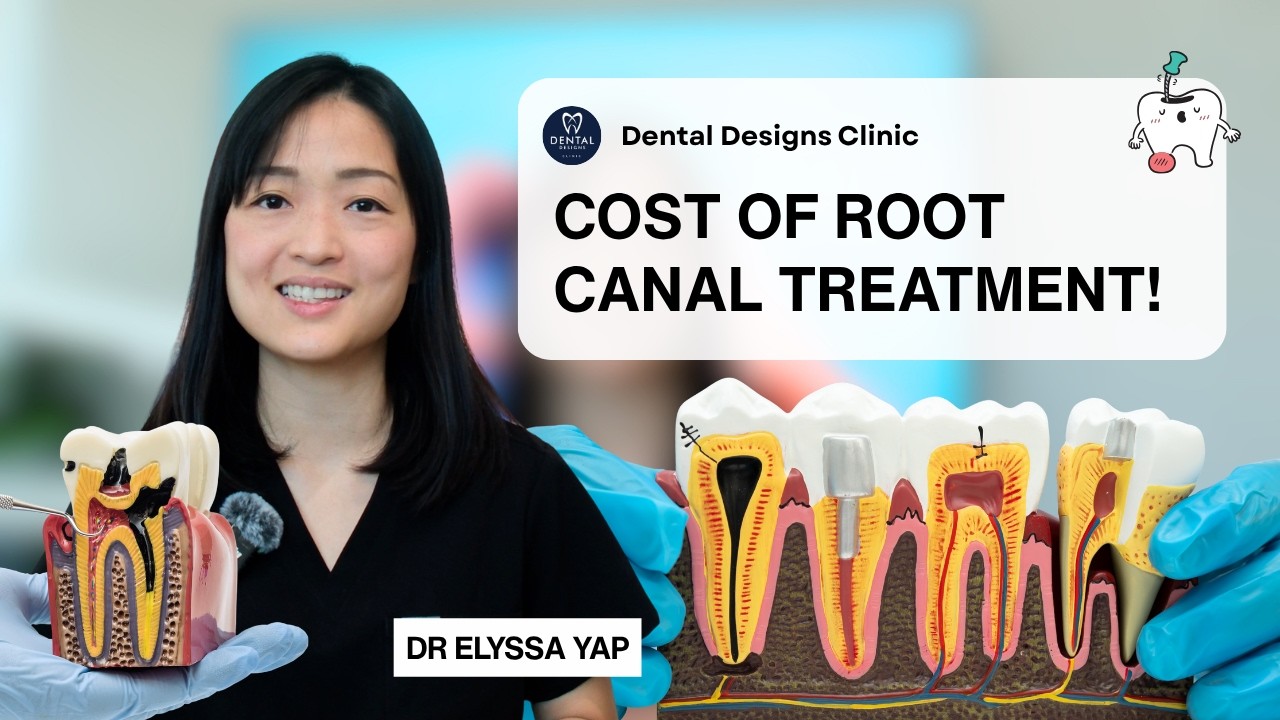
Dr Ho Ying Yao from Dental Designs Clinic in Singapore explains how dentists decide whether a tooth needs root canal treatment, and why some teeth also need a post and core plus a crown afterwards.
He starts with the three common causes: tooth decay, cracks, and trauma. He then describes typical warning signs of a root canal infection, including spontaneous sharp pain, temperature sensitivity, pain when biting, and night pain. Dr Ho outlines the purpose of root canal treatment: removing infected pulp, cleaning the canals to reduce infection and relieve pain, then sealing and filling the canals to lower the risk of reinfection.
He starts with the three common causes: tooth decay, cracks, and trauma. He then describes typical warning signs of a root canal infection, including spontaneous sharp pain, temperature sensitivity, pain when biting, and night pain. Dr Ho outlines the purpose of root canal treatment: removing infected pulp, cleaning the canals to reduce infection and relieve pain, then sealing and filling the canals to lower the risk of reinfection.
After root canal treatment (often 1 to 2 appointments), some teeth may be too broken down to hold a filling securely. In these cases, a post acts like a supportive pillar for the core build-up. A crown is then used to reduce long-term cracking or fracture risk. He also shares aftercare advice: brush and floss consistently, avoid biting hard objects, and attend regular dental visits.
This video frames root canal treatment as part of a wider plan to keep a compromised tooth functional. Dr Ho Ying Yao highlights that infection often starts when decay, a crack, or trauma allows bacteria to reach the pulp. Symptoms can include spontaneous sharp pain, sensitivity to hot or cold, pain on biting, and night pain. Root canal treatment aims to remove infected pulp, clean the canals, and then seal them to reduce reinfection risk.
He also explains why restoration matters after treatment. If a tooth is heavily broken down, a post and core may be used to support the build-up so the final restoration is stable. A crown is presented as a protective cover that helps lower the chance of future fractures or cracks. Ongoing care matters too: regular brushing, flossing, avoiding hard biting, and routine checkups to protect the restored tooth.
He also explains why restoration matters after treatment. If a tooth is heavily broken down, a post and core may be used to support the build-up so the final restoration is stable. A crown is presented as a protective cover that helps lower the chance of future fractures or cracks. Ongoing care matters too: regular brushing, flossing, avoiding hard biting, and routine checkups to protect the restored tooth.